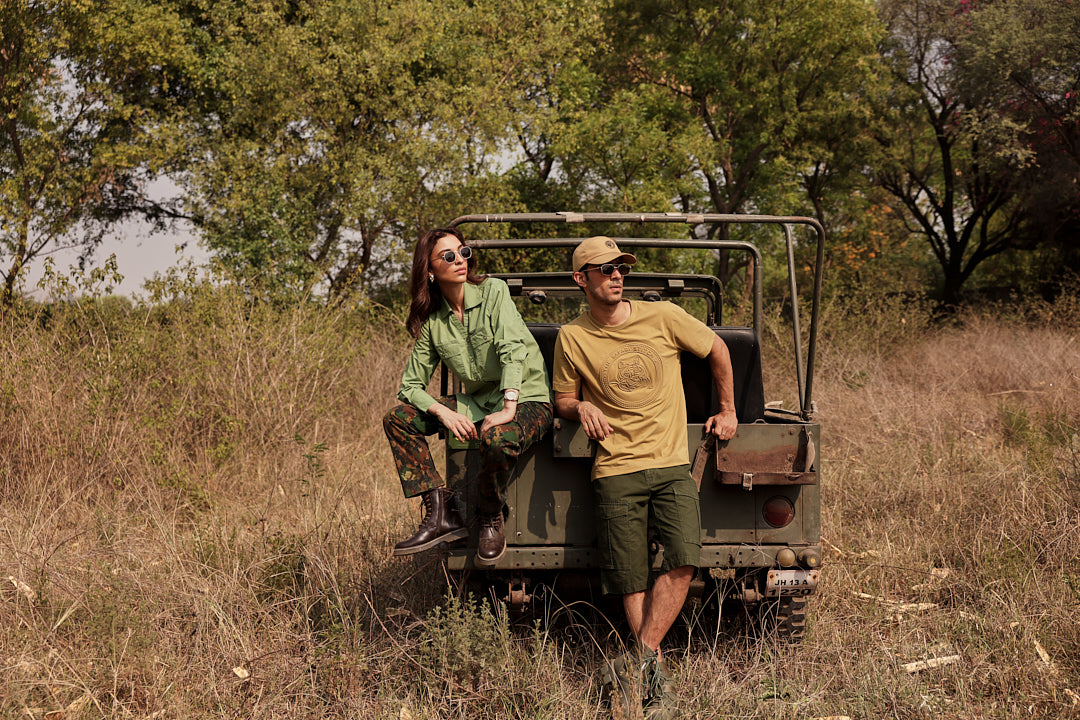
Safari Cargo Pants: What to Wear for a Comfortable Jungle Trip
Most people pack for safari the way they pack for any trip. Something that looks the part, a pair of jeans for backup, maybe shorts if it gets hot. And the first morning drive sorts it out pretty quickly. You leave camp before sunrise in Ranthambore when it is somewhere around 8 or 9 degrees Celsius, you are moving through open forest in an uncovered jeep, and within twenty minutes you have figured out that jeans were a bad idea. Not terrible. Just quietly wrong in a way that only gets more obvious as the day wears on.
We have made enough of these mistakes to know what actually matters. And the bottom half of your kit matters more than most people give it thought. Getting the right pair of mens cargo pants sorted before you leave is one of those decisions that pays off quietly, across every single drive.
The funny thing is, most people only start understanding the value of proper safari cargo pants after their first couple of drives. Until then, it all sounds slightly overthought. Then you spend six hours adjusting stiff denim in a dusty jeep and suddenly the conversation makes complete sense.
What Safari Actually Does to Your Clothing:
Safari conditions are specific in a way that regular travel is not, and it helps to understand that before you start packing.
The temperature alone is the thing most people underestimate. A winter morning in Bandhavgarh or Kanha can start at 7 or 8 degrees Celsius. By 11am it is 30. You are outside through all of it, mostly seated, which is its own thing. A moving jeep at 40 kilometres an hour in 9-degree air feels colder than it reads. Sitting stationary in direct sun at noon in the same vehicle feels hotter. You are always chasing the middle, never quite finding it.
African drives have their own version of this. The Maasai Mara in July starts cold, proper jacket-and-gloves cold, and then the morning opens up and by mid-drive you are pulling layers off. Tanzania in the dry season is dustier than anything in India, which is saying something. The dust in central Indian parks, that fine orange laterite that coats everything by hour two of a morning drive, is something you only really understand after it has settled into your stitching, your pockets, your camera bag, your forearms.
Synthetic fabrics hold that dust differently than cotton does. They hold heat differently too. After a few hours in a jeep at 29 degrees with polyester against your skin, you know. You really know.
Safaris are also just long. Morning drive, lodge break, afternoon drive. You are in the same clothes from before sunrise until after golden hour, sometimes rewearing them the next day because you packed light or because the laundry situation at the lodge is what it is. Comfort and versatility are not optional. They are the whole point.
That is also why safari cargo pants end up becoming such an important part of the overall experience. You notice good ones slowly over the course of a trip. You notice bad ones almost immediately.
Why Cargo Pants Actually Make Sense Here:
There is a version of cargo pants that deserves its bad reputation. The ones with seventeen pockets that sit awkwardly, or the overly tactical look that has nothing to do with how you actually move in a safari vehicle. But the underlying logic of a cargo pant for this environment is completely sound, and most people who write them off have never actually needed pockets in the field.
On a game drive, a bag in your footwell is almost useless. You are watching. Something is happening. You do not want to unbuckle, dig through a bag, find your phone, rebuckle, and miss whatever was moving. A deep side pocket that fits your phone and your hand without effort is just practical. Same with a lens cloth, a pair of gloves for cold mornings, a folded permit, a power bank if you are out for a full day. These things are small individually. Together they are the difference between a comfortable drive and a mildly frustrating one.
Good safari cargo pants also need to move with you. Slim fits become uncomfortable after about ninety minutes of sitting. The fabric pulls at the thigh, the waistband digs, and you spend the rest of the drive shifting around instead of watching. An articulated cut, one that actually maps how the body moves rather than how it looks standing still, handles long seated hours very differently. It is the kind of detail you only notice because it is absent in so many regular travel pants.
A good pair of mens cargo pants almost disappears while you are wearing it. That is usually the sign things have been designed properly. You stop thinking about the waistband, the pockets, the fabric sticking in the heat. Your attention stays on the drive instead.
For mens cargo pants specifically, this is where the difference between a purpose-built safari piece and a general outdoor pant really shows up. Fabric weight, how the waistband behaves after several hours, pocket depth when you are actually in a seat. Most brands do not think about any of this. The ones that do produce something very different.
The Fabrics Worth Understanding:
Cotton is the starting point for anything worn in this environment. Not because it is the fashionable choice, but because it breathes in jungle heat and manages dust in a way that synthetic-heavy fabrics do not. That said, how the cotton is constructed and finished makes a genuine difference.
A canvas cotton, the kind used in the Explorer Utility Cargo Pants from The Safari Stitch, is a tightly woven fabric that is inherently durable. Raw canvas can feel stiff, which is a problem if you are going to be sitting in the same pair of pants for eight hours. The enzyme and silicone wash process these pants go through softens the fabric without stripping the structure. You get a pant that will last across multiple safari trips and still feels good by the end of a long day. Six functional pockets with engraved pullers, large side cargo pockets built so they sit correctly when you are seated rather than pulling awkwardly at the hip, and an articulated outdoor cut. For the dustier, rougher Indian reserves, this is the version that makes the most sense.
This is also where The Safari Stitch approaches things a little differently from regular outdoor brands. The focus is less on creating something aggressively technical and more on creating safari clothing that feels genuinely wearable across long, real-world days in the wild.
For the traveller who needs their safari pants to cover more than just drives, the Explorer Chino takes a different approach. The fabric is a micro-sanded peach twill with a 2% Lycra component, which changes how it moves and how it feels against the skin. More stretch, a slightly more polished drape, and a silhouette that sits closer to a smart casual pant than a traditional cargo. Eight pockets including zip options. It is the piece that makes more sense if your trip involves lodge dinners, a city day before or after, or just a preference for something that reads a bit cleaner. Still cotton-forward, still genuinely breathable, just a different version of the same utility.
Then there is the Forest Trail Utility Pants, which solve a problem that most safari packing guides do not address at all: what to wear on cold winter safaris. The spacer knit fabric, 78% cotton with a small percentage of polyester and spandex, feels structured without being heavy. It has some thermal character without the bulk of a heavier woven. For an early morning drive in Dudhwa in January, or a South African winter game drive where the temperature before sunrise sits at 7 or 8 degrees Celsius and does not climb quickly, this construction is genuinely useful. As the day warms up, the fabric breathes well enough that you are not suddenly uncomfortable. Six utility pockets, a cleaner tailored line than a standard cargo. It reads more refined but performs well in the field.
Not all safari cargo pants are built equally either. Some work well for colder parks and layered winter drives, while others make more sense in hotter, dustier conditions where breathability matters more than anything else.
These are three different answers to the same question, and the right one depends on where you are going and what the season actually looks like on the ground.
On Safari Cargo Shorts:
The full-length pant covers most safari conditions. But there are specific trips where shorts are the honest answer and pretending otherwise is just impractical.
Peak summer in Tadoba or Panna, when afternoon temperatures are pushing 40 degrees Celsius and the humidity is up, is one of them. The hotter months in parts of Kenya and Tanzania are another. In that kind of sustained heat, adding fabric from the knee down is a comfort issue, not a style one.
The Explorer Utility Cargo Shorts carry the same canvas construction and pocket system as the full-length utility pant, enzyme and silicone washed for softness, with the same articulated cut. For anyone who already knows the utility pants and wants a shorter version for hot-weather trips, it is a natural extension. The Explorer Flow Cargo Shorts take a lighter approach with a micro-peached twill, 2% Lycra, a relaxed fit through the thigh, and angled stitch panels for easier movement. More breathable, more stretch-focused, and particularly good in high-humidity summer conditions.
The point is not to choose between shorts and pants. It is to have the right option available for the conditions you are actually going into. Cargo pants for most of the year in most Indian parks. Shorts when the heat is genuinely that high. Both if the trip spans different conditions.
Getting the Bottom Half Right:
Safari clothing in India is surprisingly hard to get right. The market is full of things that look like they belong on safari but were not designed with any real understanding of what the field asks of them. Fabrics that hold heat, pockets that look right but are not positioned usefully, cuts that work in a fitting room and restrict movement after an hour in a jeep.
The longer your safari trips become, the more you start appreciating thoughtfully made mens cargo pants. Especially pieces that can handle multiple drives, temperature swings, dust, and repeated wear without becoming uncomfortable halfway through the trip.
The range at The Safari Stitch was built specifically to solve this. Not from a brief about what safari clothing should look like, but from time spent in actual conditions. The Explorer Utility Cargo Pants, the Explorer Chino, the Forest Trail Utility Pants, each one addresses a different version of the problem.
That understanding sits at the centre of how The Safari Stitch designs its safari clothing. The goal is not to make clothing that simply looks rugged, but clothing that genuinely feels comfortable through real safari conditions.
Pair whichever makes sense with a good cotton shirt and a packable overshirt for the mornings. That is really the whole kit. It does not need to be complicated.
By the end of a long drive, when the dust has settled and the light has dropped and you have been in the same clothes for nine hours, the difference between clothing that was thought about and clothing that was not is completely obvious. You are either comfortable and barely noticing what you are wearing, or you have been quietly managing it all day. Safari is too good to spend it managing your clothing.
And honestly, once you travel with proper safari cargo pants, it becomes surprisingly difficult to go back to regular travel trousers for jungle trips.
Frequently Asked Questions:
-
What should I wear on a jungle safari?
Breathable, cotton-forward clothing in neutral tones. For the bottom half, well-made safari cargo pants with functional pockets are the practical foundation across most conditions. Fabrics that manage heat and dust over a long day make a significant difference by the afternoon.
-
Are cargo pants good for safari?
Yes, when they are actually designed for safari conditions rather than general outdoor use. Pocket placement, cut, and fabric all behave differently in a jeep than they do in a store, and purpose-built safari cargo pants reflect that in ways regular travel pants do not.
-
What is the best fabric for mens cargo pants on safari?
Cotton and cotton-forward blends. A canvas cotton with a soft finish handles durability and all-day comfort. A peach-finish twill with a small Lycra component adds stretch and a more refined feel. For winter safaris, a spacer knit balances warmth and breathability without adding bulk. Avoid anything that is primarily polyester.
-
Should I pack cargo shorts or cargo pants for safari?
Cargo pants for most trips and most of the year. Shorts are genuinely useful for peak summer in high-heat reserves like Tadoba, Panna, or Bandhavgarh in May and June, and for certain months in East Africa. Having one pair of each covers most safari itineraries without overpacking.
-
What colours work best for safari clothing?
Neutral and earthy. Khaki, olive, muted brown, dusty green. These sit correctly in a wildlife environment, show dust and wear less dramatically, and work together as a coherent outfit across multiple days. Avoid white, anything bright, and heavy patterns.